October 17, 2025
Clean Smarter, Think Sharper

By Julie Gregory, Chief Health Liaison for Apollo Health
Most of us reach for cleaning products to make our homes look and smell fresh. But hidden behind the pleasant scent of “mountain air” or “spring breeze” may be hundreds of chemicals — some known to irritate the lungs or skin, others now linked to hormonal disruption and even cognitive decline.
Emerging research reveals that what we breathe and absorb while cleaning can subtly affect how our brains function over time. The good news? With just a few mindful swaps, you can dramatically reduce your exposure and make your home healthier for both body and mind.
The Hidden Connection Between Cleaners and Cognition
Every time we spray, scrub, or disinfect, we may release volatile organic compounds (VOCs) — tiny airborne particles that linger long after the cleaning is done. These compounds react with indoor air to form new chemicals, some of which are linked to oxidative stress and inflammation, two processes strongly associated with brain aging and neurodegenerative disease.
Even low levels of chronic exposure matter. Research on housekeepers and frequent home cleaners has found higher rates of respiratory issues, headaches, and reduced cognitive performance later in life. Animal studies show that certain solvents and preservatives can disrupt neurotransmitters and increase brain inflammation.
While occasional use of a conventional product won’t cause harm in most people, repeated exposure — especially in poorly ventilated areas — can contribute to a growing “toxic load” that burdens the brain’s natural detoxification systems.
Why “Green” Doesn’t Always Mean Safe
Walk down any store aisle and you’ll see labels boasting natural, eco-friendly, or non-toxic. But marketing claims aren’t always regulated. Some “green” cleaners still contain fragrance blends, harsh surfactants, or preservatives that off-gas harmful compounds.
A truly safer cleaner is one that:
- Fully discloses all ingredients — avoiding vague terms like “fragrance” or “proprietary blend”
- Avoids high-risk chemicals — including quaternary ammonium compounds (quats), formaldehyde-releasing preservatives, and synthetic musks
- Minimizes VOC emissions — by skipping aerosol sprays and strong synthetic scents
- Uses mild, plant- or mineral-based surfactants — that biodegrade easily
- Carries credible third-party certification — such as EPA Safer Choice, which requires ingredient transparency and safety screening
Top Ingredients to Avoid
| Ingredient/Category | Common Use | Implications for Brain Health |
|---|---|---|
| Quaternary Ammonium Compounds (“Quats”) | Disinfectants, sanitizing wipes, fabric softeners | Linked to respiratory irritation and may promote neuroinflammation |
| Formaldehyde & Formaldehyde-Releasing Preservatives | Preservatives in cleaners & detergents | Known carcinogen that can also affect nervous system function |
| Fragrance Blends & Synthetic Musks | Added scent in most cleaners | Contain VOCs and hormone disruptors that may alter neurotransmitter balance |
| Chlorine Bleach & Ammonia | Disinfectants, toilet bowl cleaners | Release irritating gases that can impair oxygen delivery to the brain |
| Glycol Ethers & Strong Solvents | Glass & oven cleaners | Associated with dizziness, fatigue, and slower cognitive processing |
Safer Cleaning Swaps for a Healthier Brain
1. Choose Simplicity Over Scent
Skip products with heavy fragrances. Clean shouldn’t smell like anything. Fragrance-free formulas or mild essential-oil blends (like lemon or eucalyptus) are easier on your brain and your sinuses.
2. Prioritize Ventilation
Open windows, turn on fans, and never spray cleaners in enclosed areas. Fresh air dilutes airborne chemicals and supports better cognitive alertness during and after cleaning.
3. Use Non-Aerosol Formats
Pump or trigger sprays reduce the number of particles that end up in your lungs. For even gentler cleaning, apply solutions directly onto cloths or sponges.
4. Simplify Your Supply Shelf
Most cleaning can be handled with a few basics:
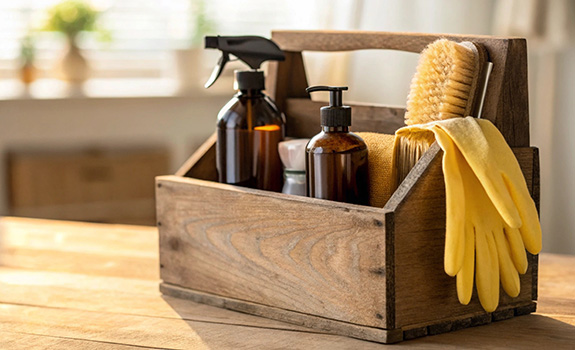
- White vinegar and water for windows and countertops
- Baking soda as a gentle scrub for sinks and stovetops
- Castile soap for general surface cleaning
- Hydrogen peroxide (3%) for occasional disinfection
- Microfiber cloths to capture dust and bacteria without chemical sprays
5. Choose Products Carefully
When in doubt, verify—don’t trust the marketing. The Environmental Working Group’s Guide to Healthy Cleaning ranks thousands of products by ingredient safety and transparency. Look for those labeled “EWG Verified™”, which meet the organization’s strictest standards for non-toxic ingredients and full disclosure. Other products are graded from A (green, safest) to F (red, most concerning) to help you make informed choices at a glance.
6. Be Mindful with Disinfectants
Reserve strong disinfectants for true sanitation needs — such as after raw meat preparation or illness — and choose hydrogen peroxide or alcohol-based options instead of chlorine or quats.
7. Maintain a Minimalist Routine
Fewer products mean fewer exposures. Regular dusting, vacuuming with HEPA filters, and wiping with mild solutions often keep a home just as hygienic as harsh chemicals do—without taxing your nervous system.
How Clean Air Supports Clear Thinking
Our brains consume about 20% of our body’s oxygen. Pollutants from cleaning agents can compete with that supply, increase oxidative stress, and impair sleep quality. Cleaner indoor air, on the other hand, supports mitochondrial function, reduces inflammation, and enhances mental clarity.
By choosing safer products, you’re not only protecting your lungs and skin — you’re helping your brain function at its best. People who switch to non-toxic cleaning routines often notice fewer headaches, improved focus, and better sleep after just a few weeks.
Building a Cleaner Cognitive Routine
Small, consistent habits protect brain health over time. Try these practical upgrades:
- Clean with awareness. Open windows, breathe deeply, and take breaks — avoiding unnecessary inhalation of cleaning vapors supports oxygen flow and cognitive clarity.
- Simplify your toolkit. Fewer products mean fewer exposures. One gentle multi-surface cleaner, a dish soap, vinegar, baking soda, and microfiber cloths can handle most tasks.
- Time your cleaning. Do heavier cleaning earlier in the day, when outdoor air is fresher and you can keep windows open longer for better ventilation.
- Protect your skin barrier. Wear gloves to prevent chemical absorption and minimize inflammation that can contribute to oxidative stress.
- Store smart. Keep all cleaning products away from heat and sunlight, which can break down ingredients and increase VOC release over time.
The Bottom Line
You don’t need a cabinet full of chemical concoctions to keep your home spotless. By simplifying your cleaning routine and choosing products free from harsh or hidden toxins, you’re giving your brain — and everyone who shares your space — a cleaner, clearer environment in which to thrive.
Think of it as a reset for your neurons — the fewer toxins your brain has to process, the more energy it has for memory, focus, and joy.