June 19, 2026
Webinar: Chronic Lyme and Alzheimer’s with Drs. Bredesen and Horowitz
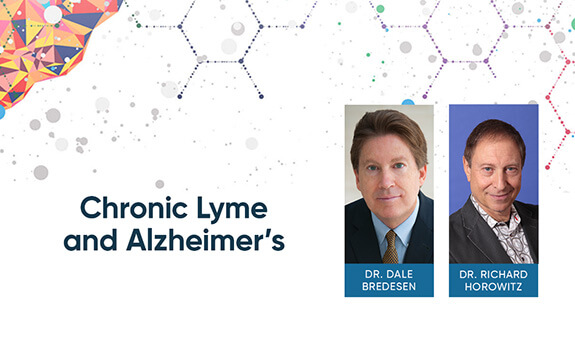

Dr. Dale Bredesen and Dr. Richard Horowitz, a Lyme disease specialist, participated in a Webinar highlighting emerging evidence linking chronic inflammatory conditions to Alzheimer’s disease biomarkers. During the webinar, Horowitz discussed a recently published case report in which treatment directed at chronic Lyme disease was associated with substantial improvement in p‑tau217, a blood biomarker commonly associated with Alzheimer’s disease risk.
The discussion explored the growing body of research suggesting that amyloid-beta and tau proteins may act, at least in part, as biological responses to infections, toxins, metabolic dysfunction, and other stressors.
The webinar also examined the role of mold exposure, immune dysfunction, long COVID, mitochondrial health, and tick-borne illnesses in cognitive decline. Bredesen noted that findings from Apollo Health’s precision-medicine research increasingly support the importance of identifying and addressing multiple contributors to cognitive impairment.
For your convenience, we have included the full webinar and transcript below.
Watch Here:
Transcript:
00:00:47 Dr. Dale Bredesen: All right, I see that we’re live now. Hi, everybody. Great to have you here.
I am really honored to be joined by one of my colleagues and someone I greatly admire, Dr. Richard Horowitz. He is a world leader in Lyme disease.
Richard, thank you so much for joining us today.
00:01:18 Dr. Richard Horowitz: Thank you for having me, Dale. It’s great to see you again.
00:01:20 Dr. Dale Bredesen: This is a great time for a couple of reasons.
First, Richard has just published a very exciting paper. I’ll let him describe it, but the bottom line is that it shows how successfully treating chronic Lyme disease may impact Alzheimer’s disease biomarkers.
It fits perfectly with what we’ve all been talking about for years.
Richard also has a fantastic book coming out, Ending Chronic Illness. The timing is perfect because it addresses many chronic illnesses, including the topics we’re discussing today.
Let’s start with the case study you recently published. Tell us a little about how this patient came to you, how you decided treatment might be helpful, and why you chose to evaluate Alzheimer’s biomarkers in someone with chronic Lyme disease.
00:02:20 Dr. Richard Horowitz: It was a bit of serendipity.
I recently completed 42 years of clinical medicine and retired from active practice. I’m now moving into the research phase of my career. Hopefully, Dale, you and I will have future discussions about setting up randomized, multicenter, placebo-controlled trials looking at Lyme disease and Alzheimer’s disease.
The way this unfolded was unusual. By the time I was finishing practice, there were very few patients left who had not already completed Dapsone Combination Therapy.
One patient was a 67-year-old woman who met all the criteria for chronic Lyme disease and post-treatment Lyme disease syndrome. She had previously developed an erythema migrans rash, had been treated with doxycycline, and had experienced symptoms for approximately 15 years.
00:03:04 Dr. Richard Horowitz: She had significant joint pain. Interestingly, her rheumatoid factor had been intermittently elevated for years, but she did not have rheumatoid arthritis. She was anti-CCP negative.
This appeared to be an inflammatory marker associated with Lyme disease.
Around that time, Quest and Labcorp began offering Alzheimer’s biomarkers. Because I was familiar with the work of Eva Sapi and Judith Miklossy, who demonstrated biofilms, amyloid-beta, and phosphorylated tau in autopsy studies of patients with Alzheimer’s disease and Parkinson’s disease, I decided to begin evaluating these biomarkers in my chronic Lyme population.
00:03:56 Dr. Richard Horowitz: To my surprise, approximately 50% of the patients I tested who had chronic Lyme disease and had not completed the Dapsone protocol still had active factors requiring treatment, whether Bartonella, mold toxicity, or other contributors.
Most of them demonstrated elevated p-tau181, elevated p-tau217, increased neurofilament light chain, and occasionally abnormal amyloid-beta 42/40 ratios.
Initially, I assumed this simply reflected neuroinflammation associated with Lyme disease. What I did not appreciate was that if these patients had presented to a neurologist with these biomarkers, they may have been diagnosed with Alzheimer’s disease and offered anti-amyloid therapies such as lecanemab or donanemab.
00:04:35 Dr. Richard Horowitz: What made this case particularly compelling was the documentation.
The patient had a prior erythema migrans rash, positive ELISA testing, positive C6 ELISA testing, positive IgM Western blot findings, and positive IgM and IgG immunoblot findings meeting CDC criteria.
There was little room for debate regarding the diagnosis. This was a classic case of chronic Lyme disease and post-treatment Lyme disease syndrome.
She had previously been diagnosed with Babesia and Bartonella, although neither appeared active during treatment. She also had evidence of metabolic syndrome, nutritional deficiencies, microbiome dysfunction, intestinal hyperpermeability, and other inflammatory contributors.
00:05:38 Dr. Richard Horowitz: I told her that while her cognition was relatively good and she felt she was functioning well, her p-tau217 level was more than twice the upper limit of normal.
Her result was 0.33, while normal was below 0.15.
I explained that I did not know whether Dapsone Combination Therapy would influence the biomarker, but I proposed completing the nine-week protocol and then repeating the testing.
She agreed.
00:06:17 Dr. Richard Horowitz: Three months after completing treatment, we repeated the p-tau217 test.
To my surprise, it had fallen into the normal range at 0.12. We reduced the level by approximately 63% using a nine-week oral generic antibiotic protocol.
When I compared the result with published data on anti-amyloid therapies, I found substantially smaller biomarker reductions over much longer periods of time.
We also observed improvement in her amyloid-beta ratio.
My working hypothesis was that Borrelia infection was contributing to elevated phosphorylated tau. I did not know whether the treatment would work, but the result was significant enough to publish.
00:07:03 Dr. Richard Horowitz: I now have a second case.
This patient also demonstrated improvement in the amyloid-beta 42/40 ratio following Dapsone Combination Therapy.
His p-tau181 and p-tau217 levels did not improve in the same way, but there may be several explanations. He had substantial mold toxicity, including gliotoxin levels approximately 14 times above normal. He also had nonalcoholic steatohepatitis, metabolic syndrome, and significant weight loss.
Many of his inflammatory markers improved, including a reduction in hemoglobin A1c from 5.8 to 5.6.
Because this is only the second patient, we are still learning how these biomarkers behave over time.
00:08:00 Dr. Richard Horowitz: It feels as though we’re opening a door that has never been opened before.
You and I have discussed this for years. How much of a role is Borrelia playing?
These findings suggest it may be contributing to both amyloid-beta and phosphorylated tau, but ultimately, we will need large, multicenter, randomized, placebo-controlled trials to answer that question definitively.
00:08:19 Dr. Dale Bredesen: You need these observations to justify the larger trials.
This is exciting because it provides new insights. The idea that amyloid and tau are responders rather than primary causes continues to gain support.
Here we see a patient in whom Borrelia and potentially other contributors appear to be driving amyloid-beta and phosphorylated tau. Treatment is followed by substantial biomarker improvement.
How long was the interval between the two p-tau measurements?
00:09:14 Dr. Richard Horowitz: Approximately five to six months.
The Dapsone protocol lasts about eight to nine weeks. We then waited roughly three months before repeating the testing.
The timing was similar in the second patient.
00:09:49 Dr. Dale Bredesen: That’s very interesting.
We observed something similar in our trial. Some patients experienced dramatic cognitive improvement while their p-tau levels temporarily increased.
Many of these individuals were losing significant amounts of weight. We repeatedly observed transient increases in p-tau among people who lost 20 or 30 pounds.
I would be interested in seeing what happens after a year of weight stability. There may be blood-volume effects or other physiological explanations.
These kinds of observations from different groups using different approaches are extremely valuable because they help all of us better understand the biology.
00:10:29 Dr. Dale Bredesen: Referring to the drug trials, they had a decrease in p-tau, not dramatically, but a decrease. Yet they had no improvement in cognition.
There is a disconnect there. In your case, there was improvement in both biomarkers and cognition.
00:10:45 Dr. Richard Horowitz: Right. And keep in mind that this was the 11th study published on Dapsone Combination Therapy over the last 10 years.
Ten of those studies were from my group, and one was from Monica Embers’ group, where she showed that dapsone and rifampin cured Lyme disease in the mouse model.
00:10:45 Dr. Richard Horowitz: Right. And keep in mind that this was the 11th study published on Dapsone Combination Therapy over the last 10 years.
Ten of those studies were from my group, and one was from Monica Embers’ group, where she showed that dapsone and rifampin cured Lyme disease in a mouse model.
We also have culture studies, animal studies, and multiple clinical studies showing that these biofilm persister forms of Borrelia can be addressed using Dapsone Combination Therapy.
00:11:06 Dr. Dale Bredesen: One of the things that is so interesting here is the difference between what we’re seeing in biomarker changes and what we’re seeing in cognitive outcomes.
As I mentioned earlier, in the anti-amyloid drug trials there was often movement in the p-tau biomarkers, but not much improvement in cognition. In your patients, we’re seeing changes in both.
That raises an important question: what exactly is driving these biomarkers?
00:11:35 Dr. Richard Horowitz: That’s exactly the question.
If Borrelia burgdorferi is helping drive amyloid-beta and phosphorylated tau production, then removing the infection should improve the biomarkers. That’s what we observed in these cases.
Of course, these are only case reports. We need larger studies to know whether this applies broadly, but the findings are certainly intriguing.
00:12:05 Dr. Dale Bredesen: One of the things we’ve learned over the years is that amyloid appears to function as part of the innate immune system.
It’s antimicrobial. It behaves almost like a protective response. The question then becomes: what is it responding to?
If infections are among the drivers, then treating those infections may help explain some of these improvements.
00:12:38 Dr. Richard Horowitz: Exactly.
When I first started looking at this literature, I was influenced by the work of Judith Miklossy and Eva Sapi. They demonstrated biofilms, amyloid, and phosphorylated tau in patients with neurodegenerative disease.
That led me to ask whether chronic infections might be contributing more than we previously appreciated.
00:13:05 Dr. Dale Bredesen: And of course, what we’re talking about here fits very well into the broader precision medicine framework.
The question isn’t whether there’s a single cause of Alzheimer’s disease. The question is what factors are contributing in a particular individual.
In some people it’s metabolic dysfunction. In others it’s vascular disease. In others it’s toxins or infections. Often it’s several of these at the same time.
00:13:40 Dr. Richard Horowitz: That’s exactly how I look at it.
When we evaluate patients using the Multiple Chronic Infectious Disease Syndrome, or MCIDS, model, we’re looking at multiple overlapping factors.
We assess infections, immune dysfunction, inflammation, toxicity, nutritional deficiencies, mitochondrial dysfunction, hormonal factors, gastrointestinal issues, sleep problems, autonomic dysfunction, and more.
The idea is that chronic illness is rarely caused by a single factor.
00:14:18 Dr. Dale Bredesen: That’s very similar to what we’ve observed in cognitive decline.
People frequently want a single answer, but the biology doesn’t work that way.
Most patients have multiple contributors that need to be addressed simultaneously.
00:14:38 Dr. Richard Horowitz: Exactly.
And when we address those contributors, we often see improvements that would not be expected if we focused on only one factor.
That’s why these biomarker changes are so interesting. They suggest that infections may be one of several important contributors that deserve more attention.
00:15:02 Dr. Dale Bredesen: Let’s talk a little bit about the treatment itself.
For those who are unfamiliar, what exactly is Dapsone Combination Therapy and why do you believe it has been so effective?
00:15:17 Dr. Richard Horowitz: The key concept is persistence.
For years we knew that Borrelia persisted despite treatment, but we didn’t fully understand why. Once the research began identifying biofilm persister forms, the picture became much clearer.
The question became: what drugs can target those persister forms?
Dapsone turned out to be one of the most effective agents we identified.
00:15:52 Dr. Richard Horowitz: Dapsone is interesting because it has antimicrobial effects, anti-inflammatory effects, excellent tissue penetration, and activity against biofilm persister forms.
Over time we developed protocols combining dapsone with other agents to improve efficacy and address co-infections when present.
00:16:24 Dr. Dale Bredesen: One of the things that has always impressed me is how systematic your approach has been.
You’ve spent decades refining these protocols rather than simply adopting a treatment and assuming it works.
00:16:40 Dr. Richard Horowitz: It took a long time.
This wasn’t something that happened overnight. It was years of trial, error, observation, and refinement.
Every protocol change came from asking why some patients improved and others did not.
00:17:06 Dr. Dale Bredesen: And what are you seeing now in terms of remission rates?
00:17:12 Dr. Richard Horowitz: Depending on the patient population and the factors involved, we see substantial numbers of patients entering long-term remission.
The key is identifying and treating all of the major contributors.
If someone still has active Babesia, active Bartonella, mold toxicity, or other significant issues, those need to be addressed as well.
00:17:52 Dr. Dale Bredesen: So it’s not simply treating Borrelia and stopping there.
00:17:56 Dr. Richard Horowitz: Exactly.
The infection may be one piece of the puzzle, but patients often have multiple overlapping contributors that must be evaluated and treated.
That’s why comprehensive assessment is so important.
00:18:20 Dr. Dale Bredesen: This really emphasizes the importance of personalized medicine.
The more we learn, the more obvious it becomes that different patients arrive at cognitive decline through different pathways.
00:18:38 Dr. Richard Horowitz: Absolutely.
And that’s why collaboration between fields is so valuable.
The work you’re doing in Alzheimer’s disease and the work we’re doing in chronic infectious disease are increasingly intersecting in meaningful ways.
00:19:02 Dr. Dale Bredesen: I agree completely.
And that’s why I think these findings are so exciting. They open up an entirely new area for investigation.
00:19:16 Dr. Richard Horowitz: We’re just beginning to understand the implications.
The next step is to gather more data and determine how broadly these findings apply.
00:19:34 Dr. Dale Bredesen: Well, let’s continue because there are several other fascinating aspects of this work that I’d like to explore.
00:20:12 Dr. Richard Horowitz: About 50% of people go into long-term remission with just this nine-week protocol…
00:10:45 Dr. Richard Horowitz: Right. And keep in mind that this was the 11th study published on Dapsone Combination Therapy over the last 10 years.
Ten of those studies were from my group, and one was from Monica Embers’ group, where she showed that dapsone and rifampin cured Lyme disease in a mouse model.
We also have culture studies, animal studies, and multiple clinical studies showing that these biofilm persister forms of Borrelia can be addressed using Dapsone Combination Therapy.
00:11:06 Dr. Dale Bredesen: One of the things that is so interesting here is the difference between what we’re seeing in biomarker changes and what we’re seeing in cognitive outcomes.
As I mentioned earlier, in the anti-amyloid drug trials there was often movement in the p-tau biomarkers, but not much improvement in cognition. In your patients, we’re seeing changes in both.
That raises an important question: what exactly is driving these biomarkers?
00:11:35 Dr. Richard Horowitz: That’s exactly the question.
If Borrelia burgdorferi is helping drive amyloid-beta and phosphorylated tau production, then removing the infection should improve the biomarkers. That’s what we observed in these cases.
Of course, these are only case reports. We need larger studies to know whether this applies broadly, but the findings are certainly intriguing.
00:12:05 Dr. Dale Bredesen: One of the things we’ve learned over the years is that amyloid appears to function as part of the innate immune system.
It’s antimicrobial. It behaves almost like a protective response. The question then becomes: what is it responding to?
If infections are among the drivers, then treating those infections may help explain some of these improvements.
00:12:38 Dr. Richard Horowitz: Exactly.
When I first started looking at this literature, I was influenced by the work of Judith Miklossy and Eva Sapi. They demonstrated biofilms, amyloid, and phosphorylated tau in patients with neurodegenerative disease.
That led me to ask whether chronic infections might be contributing more than we previously appreciated.
00:13:05 Dr. Dale Bredesen: And of course, what we’re talking about here fits very well into the broader precision medicine framework.
The question isn’t whether there’s a single cause of Alzheimer’s disease. The question is what factors are contributing in a particular individual.
In some people, it’s metabolic dysfunction. In others, it’s vascular disease. In others, it’s toxins or infections. Often it’s several of these at the same time.
00:13:40 Dr. Richard Horowitz: That’s exactly how I look at it.
When we evaluate patients using the Multiple Chronic Infectious Disease Syndrome, or MCIDS, model, we’re looking at multiple overlapping factors.
We assess infections, immune dysfunction, inflammation, toxicity, nutritional deficiencies, mitochondrial dysfunction, hormonal factors, gastrointestinal issues, sleep problems, autonomic dysfunction, and more.
The idea is that chronic illness is rarely caused by a single factor.
00:14:18 Dr. Dale Bredesen: That’s very similar to what we’ve observed in cognitive decline.
People frequently want a single answer, but the biology doesn’t work that way.
Most patients have multiple contributors that need to be addressed simultaneously.
00:14:38 Dr. Richard Horowitz: Exactly.
And when we address those contributors, we often see improvements that would not be expected if we focused on only one factor.
That’s why these biomarker changes are so interesting. They suggest that infections may be one of several important contributors that deserve more attention.
00:15:02 Dr. Dale Bredesen: Let’s talk a little bit about the treatment itself.
For those who are unfamiliar, what exactly is Dapsone Combination Therapy, and why do you believe it has been so effective?
00:15:17 Dr. Richard Horowitz: The key concept is persistence.
For years, we knew that Borrelia persisted despite treatment, but we didn’t fully understand why. Once the research began identifying biofilm persister forms, the picture became much clearer.
The question became: what drugs can target those persister forms?
Dapsone turned out to be one of the most effective agents we identified.
00:15:52 Dr. Richard Horowitz: Dapsone is interesting because it has antimicrobial effects, anti-inflammatory effects, excellent tissue penetration, and activity against biofilm persister forms.
Over time, we developed protocols combining dapsone with other agents to improve efficacy and address co-infections when present.
00:16:24 Dr. Dale Bredesen: One of the things that has always impressed me is how systematic your approach has been.
You’ve spent decades refining these protocols rather than simply adopting a treatment and assuming it works.
00:16:40 Dr. Richard Horowitz: It took a long time.
This wasn’t something that happened overnight. It was years of trial, error, observation, and refinement.
Every protocol change came from asking why some patients improved and others did not.
00:17:06 Dr. Dale Bredesen: And what are you seeing now in terms of remission rates?
00:17:12 Dr. Richard Horowitz: Depending on the patient population and the factors involved, we see substantial numbers of patients entering long-term remission.
The key is identifying and treating all of the major contributors.
If someone still has active Babesia, active Bartonella, mold toxicity, or other significant issues, those need to be addressed as well.
00:17:52 Dr. Dale Bredesen: So it’s not simply treating Borrelia and stopping there.
00:17:56 Dr. Richard Horowitz: Exactly.
The infection may be one piece of the puzzle, but patients often have multiple overlapping contributors that must be evaluated and treated.
That’s why comprehensive assessment is so important.
00:18:20 Dr. Dale Bredesen: This really emphasizes the importance of personalized medicine.
The more we learn, the more obvious it becomes that different patients arrive at cognitive decline through different pathways.
00:18:38 Dr. Richard Horowitz: Absolutely.
And that’s why collaboration between fields is so valuable.
The work you’re doing in Alzheimer’s disease and the work we’re doing in chronic infectious disease are increasingly intersecting in meaningful ways.
00:19:02 Dr. Dale Bredesen: I agree completely.
And that’s why I think these findings are so exciting. They open up an entirely new area for investigation.
00:19:16 Dr. Richard Horowitz: We’re just beginning to understand the implications.
The next step is to gather more data and determine how broadly these findings apply.
00:19:34 Dr. Dale Bredesen: Well, let’s continue because there are several other fascinating aspects of this work that I’d like to explore.
00:20:12 Dr. Richard Horowitz: About 50% of people go into long-term remission with just this nine-week protocol…
Remember, it took me a decade—10 years—working out the doses of dapsone to figure this out. My wife, who was sick for 25 years with Lyme disease, is now eight years in full remission.
00:20:25 Dr. Dale Bredesen: Yeah.
00:20:27 Dr. Richard Horowitz: Okay.
She had tried 50 mg of dapsone for a year. She relapsed and was PCR-positive in her blood. She then did 100 mg of dapsone for six months. She would say, “Honey, I feel great.” She stopped it, relapsed, and then did 100 mg of dapsone twice a day—200 mg daily—for one month.
00:20:39 Dr. Dale Bredesen: Wow.
00:20:46 Dr. Richard Horowitz: Right.
00:20:51 Dr. Richard Horowitz: She has been in remission for eight years.
The reason she did so well with only one month of double-dose dapsone is that she had already completed a year and a half of lower-dose dapsone, reducing the biofilm persister forms of the bacteria.
I’ve seen this in other patients as well. Some pediatric patients have spent years on low-dose dapsone, and then, once their Bartonella FISH test is positive, they complete the nine-week protocol and remain in remission for three or four years without additional treatment.
The key is that Babesia cannot be active for this protocol to work optimally.
If Bartonella is present—and it now appears in approximately 80–90% of our patients—you need a minimum of four two-week pulses of high-dose Dapsone Combination Therapy. That consists of six days of dapsone at 400 mg per day.
00:21:12 Dr. Richard Horowitz: This dose was based on Johns Hopkins research showing that when rifampin, azithromycin, and methylene blue are used together, it takes approximately six days in culture to eradicate the biofilm persister forms of Bartonella.
There are now more than 18 pathogenic Bartonella species known to cause human disease.
I was speaking with Garth Ehrlich yesterday, and he mentioned that some autopsy studies are identifying not only Lyme disease but also Bartonella in the brains of patients with dementia.
That doesn’t surprise me at all.
For years, researchers such as Edward Breitschwerdt have emphasized the importance of Bartonella, and we’re now finding it in many chronically ill patients.
00:22:03 Dr. Richard Horowitz: Anyone diagnosed with dementia should be evaluated not only for Borrelia burgdorferi but also for organisms such as Babesia and Bartonella.
And not just Bartonella henselae. We should also be looking for Bartonella quintana, Bartonella bacilliformis, and other species.
00:22:24 Dr. Dale Bredesen: Wow.
00:22:26 Dr. Richard Horowitz: Yeah.
In one of my newer patients, we identified Bartonella elizabethae along with Bartonella henselae. After the nine-week dapsone protocol, his amyloid-beta ratio improved.
By the way, I’m glad you mentioned the weight loss issue. I was trying to understand how the amyloid-beta ratio improved while the p-tau increased.
His nonalcoholic steatohepatitis improved with weight loss. His metabolic syndrome improved with weight loss. It was somewhat confusing.
I wondered whether mycotoxins might have been contributing to the elevated p-tau.
00:22:51 Dr. Richard Horowitz: That’s something that still needs to be investigated.
Bartonella appears to be a significant factor.
At the same time, I don’t believe most patients need long-term dapsone therapy.
The only situation where longer treatment might make sense is when the primary drivers are not infectious.
For example, pesticide exposure, mold exposure, microbiome dysfunction, inadequate short-chain fatty acid production, mitochondrial dysfunction, oxidative stress, dysautonomia, or other noninfectious contributors.
00:23:26 Dr. Richard Horowitz: In those situations, longer treatment might be worth studying, but that will require future clinical trials.
I’d love for you and me to sit down and design one.
Yesterday I was speaking with Nikki Schultek and Garth Ehrlich about exactly this question.
Should we begin with a pilot study? Should we move directly into a larger randomized trial?
I’ll definitely be calling you for advice because I’d like your perspective on how best to design it.
00:23:59 Dr. Dale Bredesen: I look forward to that discussion.
There’s so much here.
I think this represents another important step forward in understanding Alzheimer’s disease and getting us closer to helping everyone improve.
In our trial, about 90% of participants improved while approximately 10% did not.
Some improved modestly, while others improved dramatically.
Dr. Kat Toups, who served as principal investigator on the study, pointed out that more than 90% of participants had evidence of some form of infection, often a tick-borne infection.
Interestingly, in our previous trial, approximately 40% had evidence of a tick-borne illness.
00:24:32 Dr. Dale Bredesen: That brings me to a question.
You frequently see mycotoxins occurring alongside these infections.
Why do mold toxins and infections seem to occur together so often?
00:25:09 Dr. Richard Horowitz: At this point, I think part of it is simply the world we’re living in.
We’re seeing more flooding, more water damage, and more environmental exposure.
Years ago, when I was testing for mold toxins, I wasn’t finding them as frequently.
Now I’m finding mycotoxins in perhaps nine out of ten patients.
Many people have no idea they’ve been exposed.
The problem is that mycotoxins are mitochondrial poisons and immune suppressants.
00:25:33 Dr. Richard Horowitz: Think about it.
You acquire Borrelia burgdorferi and Bartonella, both of which can impair immune function.
Research from Nicole Baumgarth and others has demonstrated effects on B-cell function.
Then a patient develops long COVID and experiences T-cell exhaustion.
Now both B cells and T cells are affected.
Then mycotoxins enter the picture.
00:26:15 Dr. Richard Horowitz: Mycotoxins are also immunosuppressive.
How can people recover when infections and toxins are simultaneously driving inflammation and immune dysfunction?
I think this reflects modern environmental exposures and the amount of water damage we’re seeing.
For example, we discovered black mold in our own home because a chimney flue had not been sealed properly.
00:26:32 Dr. Dale Bredesen: Wow.
00:26:33 Dr. Richard Horowitz: Fortunately, neither my wife nor I became ill.
Maybe genetics played a role. Maybe it was the large number of supplements we take every day.
If anyone is interested, they can visit cangetbetter.com and look at the nutrition section to see some of what we use.
The goal is to reduce inflammation and support detoxification pathways.
00:27:01 Dr. Richard Horowitz: Mold exposure is incredibly common.
Did you routinely evaluate mycotoxins in your study?
00:27:13 Dr. Dale Bredesen: Absolutely.
We evaluated them in both our previous trial and the current one.
Most participants had some degree of exposure.
I think your point is exactly right.
We’re all exposed, but most of us clear these toxins reasonably well.
Problems arise when people have genetic detoxification issues, acquired detoxification problems, immune dysfunction, or other vulnerabilities.
00:27:25 Dr. Dale Bredesen: That’s why this has to be evaluated on an individual basis.
You have to identify the contributors and address them.
And now, with three grandsons and what feels like 300 viruses, we’re trying to keep our immune systems functioning as well as possible.
Let’s move to some audience questions.
The first is from Nora.
She says she’s spent 18 months on six different antibiotics and still has not successfully eliminated her Lyme disease.
Now that you’ve retired, who would you recommend for patients seeking treatment today?
00:28:18 Dr. Richard Horowitz: Great question.
I created a physician training course and have trained hundreds of doctors in these protocols.
The major breakthrough for me occurred around 2015 when researchers such as Ying Zhang at Johns Hopkins began describing Borrelia as a biofilm persister bacterium.
00:28:49 Dr. Richard Horowitz: Before that, we knew Lyme disease persisted, but we thought persistence was related primarily to intracellular forms, cystic forms, L-forms, S-forms, and other cell-wall-deficient forms.
Then we learned about biofilm persister forms.
Interestingly, these forms resemble what we see in diseases such as tuberculosis and leprosy.
00:29:18 Dr. Richard Horowitz: That’s how I arrived at Dapsone Combination Therapy.
I looked at how leprosy was treated and found that rifampin and dapsone were core components.
Dapsone checked multiple boxes.
It’s anti-inflammatory, penetrates the brain effectively, has antiparasitic activity against organisms such as Babesia, and may help address autoimmune phenomena driven by molecular mimicry.
Most importantly, it functions as a biofilm persister drug.
00:29:18 Dr. Richard Horowitz: For patients who are not improving, I recommend visiting ILADS.org and locating an ILADS-trained physician.
Not every clinician is using Dapsone Combination Therapy, but many are familiar with it.
Some physicians remain concerned about side effects, but the laboratory abnormalities we see generally resolve.
The anemia reverses. Patients may lose several grams of hemoglobin temporarily, but values typically return to baseline within two to three months, especially when folic acid is used appropriately.
Liver function abnormalities also improve after treatment.
00:30:04 Dr. Richard Horowitz: There are no long-term side effects as long as you follow the protocol as it has been developed and written.
From my perspective, you cannot successfully overcome chronic Lyme disease or Bartonella without pulsing biofilm-persister drug regimens. I’ve tried every other approach.
00:30:15 Dr. Dale Bredesen: Yeah.
00:30:16 Dr. Richard Horowitz: I’ve been doing this for 42 years, and this is the only approach I know that consistently puts people into long-term remission.
In fact, it appears to cure a significant percentage of patients. My wife has had COVID twice, she’s had influenza, and none of her Lyme disease symptoms have ever returned.
00:30:28 Dr. Dale Bredesen: One of the interesting things to me when we were studying amyloid years ago was that if you wanted to design an endogenous anti-biofilm agent, you would likely include both metal-binding activity and antimicrobial activity.
That’s a common strategy for disrupting biofilms.
And what does amyloid do?
It binds divalent metals very tightly, and it kills bacteria and viruses. In that sense, it really behaves as an endogenous anti-biofilm agent.
00:31:01 Dr. Richard Horowitz: Yeah.
00:31:03 Dr. Dale Bredesen: These concepts keep coming back again and again.
Very interesting.
Here’s a question from Margarita. She asks: For patients with cognitive decline or memory impairment, what is your preferred Lyme disease workup? Are there tests you find more useful than the standard CDC two-tier testing?
00:31:27 Dr. Richard Horowitz: The first-line test I prefer is IGeneX.
They offer both IgM and IgG immunoblots that evaluate multiple strains of Borrelia. I generally do not rely on the standard ELISA followed by Western blot, or the modified two-tier testing approach, because those methods are most useful in early Lyme disease.
00:31:43 Dr. Richard Horowitz: The way I approach this is through a validated symptom questionnaire available on my website, cangetbetter.com.
Patients can download the questionnaire and complete it themselves.
We validated this tool in approximately 1,600 individuals through university-based research that included healthy controls.
If someone scores above 63, they are roughly two standard deviations above the mean.
One of the most important symptoms to identify is migratory pain.
00:32:18 Dr. Richard Horowitz: If someone has migratory joint pain, migratory muscle pain, or migratory nerve pain—tingling, numbness, burning, stabbing, or even a vibration sensation that moves around the body—and they have even a single Borrelia-specific band on immunoblot testing, that becomes highly significant.
Bands such as 23 (OspC), 31 (OspA), 34 (OspB), 39, or 83/93 are particularly important.
If migratory pain is present and you’ve ruled out the other major diseases that can cause migratory symptoms—such as lupus, Reiter syndrome, inflammatory bowel disease, acute rheumatic fever, hepatitis, and gonococcal arthritis—then chronic Lyme disease moves very high on the differential diagnosis.
00:33:01 Dr. Dale Bredesen: Yeah.
00:33:01 Dr. Richard Horowitz: In those circumstances, I would strongly consider the dapsone protocol.
If someone has already failed a month or more of conventional antibiotic treatment, I often move directly to biofilm persister therapies because they have been so effective for Lyme disease.
00:33:15 Dr. Richard Horowitz: At the same time, you still need to evaluate the entire 16-point MCIDS model.
Do they have Babesia?
If so, obtain a Babesia immunoblot and Babesia FISH test.
Do they have active Bartonella?
If so, obtain a Bartonella FISH test through IGeneX or another qualified laboratory and perform Bartonella immunoblot testing while looking for multiple strains.
00:33:43 Dr. Dale Bredesen: Yeah.
00:33:43 Dr. Richard Horowitz: In my upcoming book, Ending Chronic Illness, I devote an entire chapter to what I call the “Three Bs”—Borrelia, Babesia, and Bartonella.
I describe the Dapsone Combination Therapy protocol almost like a cookbook.
Patients can take it to their physician and use it as a practical guide.
I also include a low-dose dapsone protocol for patients who need a slower approach or who must stop and restart treatment.
The goal is to give clinicians a roadmap for working through the 16-point model.
00:34:00 Dr. Dale Bredesen: Great. It sounds like physicians are going to receive a lot of practical tools from that book.
Margarita also asks an important question:
How do you determine whether Lyme disease is actually contributing to a patient’s cognitive symptoms rather than simply being an incidental finding?
00:34:15 Dr. Richard Horowitz: That’s where differential diagnosis becomes essential.
You always begin with a standard medical evaluation.
Check vitamin B12, folate, methylmalonic acid, thyroid function, heavy metals such as mercury, lead, arsenic, and aluminum, and evaluate for mold toxicity and other known causes of cognitive impairment.
00:34:35 Dr. Richard Horowitz: You systematically work through the differential diagnosis.
In Ending Chronic Illness, I include a detailed list of conditions that should be evaluated whenever someone presents with cognitive decline.
Most of the time, however, it’s not just one thing.
Someone may have insulin resistance, low B12, mold exposure, heavy metals, microbiome dysfunction, and chronic infections simultaneously.
00:35:07 Dr. Richard Horowitz: In my clinical experience—covering more than 13,000 chronically ill patients over 42 years—the factors most commonly associated with cognitive dysfunction are Lyme disease, Babesia, Bartonella, mold toxicity, and heavy metals.
That doesn’t mean thyroid disease, nutrient deficiencies, mitochondrial dysfunction, or gut-brain axis issues are unimportant.
They absolutely matter.
But infections and toxins repeatedly rise to the top of the list.
00:35:42 Dr. Dale Bredesen: Great. Thank you.
Margarita also asked about the evaluation through UCLA.
For those interested, patients can contact us through the Pacific Neuroscience Institute, where we are actively seeing patients.
00:35:59 Dr. Dale Bredesen: Here’s another question.
This one is from Tammy.
She asks:
“There are so many oxygen and blood-cleansing therapies available. If someone could only afford one, which would you consider most valuable? IV ozone, HBOT, mild HBOT, hydrogen, therapeutic plasma exchange, EBOO, or something else?”
I realize these approaches have very different mechanisms, but do you have a favorite?
00:36:40 Dr. Richard Horowitz: You have to understand my bias.
I’ve had patients travel to Germany for hyperthermia treatments where temperatures reached 106 or 107 degrees. Some improved temporarily, but many eventually relapsed.
I’ve had patients undergo SOT therapy. Some improved, but many later relapsed.
I’ve seen the same thing with IV ozone.
00:37:05 Dr. Dale Bredesen: Wow.
00:37:06 Dr. Richard Horowitz: IV ozone works by generating oxidative stress that can damage pathogens.
The challenge is that we’re in the middle of what I consider a worldwide epidemic.
According to published estimates, roughly one out of seven people globally may have been exposed to Lyme disease, and I suspect the true number is even higher.
00:37:10 Dr. Richard Horowitz: My concern is that while therapies such as hyperbaric oxygen or ozone may provide temporary improvement, they do not cure a chronic persistent infection.
If we’re discussing persistent Borrelia infection, there are only a small number of therapies that have demonstrated meaningful activity against persister forms.
Disulfiram is one example, based on work published by Ken Liegner and others.
Dapsone Combination Therapy is another, with multiple studies supporting its use.
00:37:43 Dr. Richard Horowitz: That’s not to say hyperbaric oxygen has no role.
Some patients benefit significantly.
Others with severe toxic burden may improve with plasma exchange.
In those situations, plasmapheresis can be helpful.
However, it is expensive and should be used selectively.
00:38:13 Dr. Richard Horowitz: For example, if a patient had completed Dapsone Combination Therapy, improved substantially, but still had severe mycotoxin exposure that remained unresolved, then plasmapheresis might be worth considering.
My goal over the past four decades has been to develop a short, affordable, oral protocol that could be used by people around the world.
That has always been my focus.
00:38:27 Dr. Dale Bredesen: Right.
00:38:28 Dr. Richard Horowitz: So yes, I admit I’m biased.
Many of these therapies can help, but I don’t consider them curative.
00:38:29 Dr. Dale Bredesen: I actually think what you’ve developed is brilliant because it comes back to public health.
How do we create therapies that can realistically be used by large populations?
If a treatment costs tens of thousands of dollars per year and only provides modest benefit, it’s difficult to scale.
What you’ve developed is far less expensive and has the potential to reduce the global burden of dementia.
00:38:45 Dr. Dale Bredesen: The other thing to remember is that these therapies have very different mechanisms.
I think of HBOT and EWOT primarily as tools for improving blood flow and oxygen delivery.
They may be useful for patients with vascular disease, sedentary lifestyles, or impaired circulation.
Plasma exchange is completely different.
00:39:19 Dr. Dale Bredesen: I think of plasma exchange primarily as a detoxification tool.
It may be useful for people with elevated microplastics, high mycotoxin burdens, or other toxic exposures where reducing the toxic load is the primary goal.
But as you said, Richard, that’s not going to eliminate a persistent Borrelia infection.
What about ozone therapy? Do you use it?
00:39:44 Dr. Richard Horowitz: Personally, I don’t.
I know patients who have improved with IV ozone and related approaches.
Borrelia burgdorferi certainly creates oxidative stress, and ozone can damage pathogens through oxidative mechanisms.
The issue is that I’ve seen too many patients relapse.
00:40:09 Dr. Dale Bredesen: Yeah.
00:40:10 Dr. Richard Horowitz: I’ve also seen patients whose veins were severely damaged after extensive IV ozone treatments.
It’s not something I feel comfortable recommending routinely.
Even within the ILADS community, you’ll find physicians taking very different approaches.
I do think ozone has a role in some circumstances.
00:40:21 Dr. Dale Bredesen: For sure.
00:40:22 Dr. Richard Horowitz: Hyperbaric oxygen therapy can be very useful in certain people with cognitive dysfunction.
The key is understanding where it fits in the overall treatment plan. Once you’ve addressed infections, reduced toxic burden, and managed the underlying inflammatory drivers, then therapies such as hyperbaric oxygen may provide additional benefit.
00:40:33 Dr. Dale Bredesen: I always come back to mechanism.
What’s actually driving the condition you’re trying to treat?
In your case, the underlying driver may be a persistent pathogen, and you’re targeting that directly.
The other important principle is to focus on the fundamentals before chasing every new therapy that appears online.
There’s a lot of pseudoscience out there. Every week it seems there’s some new device, supplement, or miracle cure being promoted.
00:40:55 Dr. Richard Horowitz: I don’t know anyone who’s tried the crystal-on-the-forehead treatment yet, Dale. You’ll have to tell me more about that one.
00:41:11 Dr. Dale Bredesen: I saw something a few days ago claiming there wasn’t a single case of Alzheimer’s disease in Israel because of a special potion someone had developed.
The claim was that if you simply bought the product, you could prevent Alzheimer’s disease.
Of course, that’s nonsense. We all know there are Alzheimer’s patients in Israel.
We work with physicians there who treat cognitive decline every day.
It’s a good reminder that we all need to be careful about misinformation and unsupported claims.
00:41:32 Dr. Richard Horowitz: Absolutely.
00:41:48 Dr. Richard Horowitz: One thing people should understand is that there has been a broader attack on science and scientific thinking.
Now, there are parts of the movement focused on chronic disease that I agree with. We clearly have a chronic illness epidemic.
Rates of autism, ADHD, autoimmune disease, and many other chronic conditions have risen dramatically.
People deserve better answers.
00:41:54 Dr. Richard Horowitz: In my book, Ending Chronic Illness, there are more than 2,000 scientific references supporting the material.
The references are being posted online because there simply wasn’t room for them in the printed book.
There are more than 170 pages of citations from journals such as JAMA, The New England Journal of Medicine, and many others.
00:42:15 Dr. Dale Bredesen: I see.
00:42:16 Dr. Richard Horowitz: Everything I’m discussing is grounded in published scientific literature.
That doesn’t mean every question has been answered, but it does mean there is a substantial evidence base behind these concepts.
It’s important today because people often ask, “What is real science and what is pseudoscience?”
00:42:29 Dr. Richard Horowitz: At the same time, you have to apply critical thinking.
There are examples in medicine where guideline panels exclude important research.
One example is the ongoing debate over chronic Lyme disease.
I believe some guidelines fail to adequately address the evidence supporting Borrelia persistence, biofilm persister forms, and the importance of overlapping factors captured in the MCIDS model.
00:42:51 Dr. Richard Horowitz: Regardless of where someone falls in that debate, physicians need to read the literature critically, evaluate the evidence themselves, and combine that evidence with clinical experience.
That’s how we move forward.
00:43:14 Dr. Dale Bredesen: Unfortunately, there are situations where the goal of achieving the best outcomes has been overshadowed by the goal of generating the best incomes.
We need to keep the focus on patient outcomes.
00:43:33 Dr. Dale Bredesen: There’s a powerful documentary featuring your work that highlights how difficult it has been for some patients with chronic Lyme disease to receive recognition and treatment.
Then long COVID arrives and suddenly everyone recognizes that a chronic post-infectious condition can exist.
It raises an obvious question: if long COVID exists, why wouldn’t chronic Lyme disease exist?
00:43:50 Dr. Dale Bredesen: That leads to an excellent question from Lindsey.
We’re seeing patients who develop cognitive decline after COVID-19 infection.
We’re also seeing some individuals who report cognitive symptoms after vaccination.
More broadly, anything that drives chronic inflammation can potentially contribute to cognitive decline.
Are you seeing similar effects in your patient population?
00:44:26 Dr. Richard Horowitz: Absolutely.
The final chapter of my new book is “V Is for Viruses,” and a significant portion of it focuses on long COVID.
Several years ago, I published research in the journal Microorganisms showing that all 16 MCIDS factors can be involved in long COVID.
00:44:43 Dr. Richard Horowitz: My hypothesis is that the problem is not simply the spike protein.
In many patients we observed multiple overlapping issues.
One major factor was low glutathione.
The lungs contain extraordinarily high concentrations of glutathione, and during the early phases of the pandemic, I published one of the first papers discussing glutathione support.
00:45:03 Dr. Richard Horowitz: During that time, we focused on reducing NF-kappa B activation using nutrients such as N-acetylcysteine, alpha-lipoic acid, and glutathione.
We also supported Nrf2 pathways using compounds such as curcumin and sulforaphane.
Interestingly, later research suggested that viral replication is associated with depletion of glutathione.
00:45:29 Dr. Dale Bredesen: Interesting.
00:45:29 Dr. Richard Horowitz: Another finding involved VEGF, or vascular endothelial growth factor.
In many patients with long COVID, elevated VEGF appeared to correlate with reactivated Bartonella infections.
We frequently found that COVID-related immune dysfunction allowed latent infections to re-emerge.
00:45:42 Dr. Richard Horowitz: Long COVID patients often developed T-cell exhaustion.
They also experienced changes in the gut microbiome, including reductions in beneficial organisms such as Bifidobacterium.
That can contribute to mood changes, fatigue, and other symptoms.
Some patients improved with adrenal support, while others required treatment for reactivated viral infections.
00:46:15 Dr. Richard Horowitz: In cases involving reactivated Epstein–Barr virus or human herpesvirus 6, we often used antiviral therapies such as famciclovir.
I also became interested in some less conventional approaches.
One example involves spironolactone, a medication commonly used for blood pressure management and hormonal disorders.
When combined with dipyridamole and standard antiviral therapy, it may affect Epstein–Barr virus replication through multiple mechanisms.
00:46:51 Dr. Richard Horowitz: I discuss some of these ideas in Ending Chronic Illness because many clinicians are asking how to better manage chronic viral reactivation.
These are promising concepts, but they still require rigorous clinical trials.
00:47:17 Dr. Dale Bredesen: Very interesting.
Here’s another question from Julie.
She’s asking whether taking a second-generation antihistamine such as Zyrtec daily for many years could contribute to dementia risk.
She has Lyme disease and mast cell activation syndrome and notices that antihistamines sometimes make her feel cognitively slower.
00:47:57 Dr. Dale Bredesen: We know from published studies that certain medications increase dementia risk.
Many anticholinergic drugs fall into that category.
Older antihistamines and benzodiazepines are common examples.
Some antidepressants have also been implicated.
But I wanted to ask you specifically about mast cell activation syndrome.
When you’re treating Lyme disease or other tick-borne illnesses and significant mast cell activation is present, what do you do?
00:48:39 Dr. Richard Horowitz: In severe mast cell activation cases, we often need H1 and H2 blockers such as Zyrtec and Pepcid.
Montelukast can also be very helpful.
At the same time, we try to address the underlying drivers.
00:48:50 Dr. Richard Horowitz: We frequently use supplements such as PEA and luteolin.
I also use diamine oxidase, or DAO, because many patients have difficulty degrading histamine efficiently.
You have to evaluate the microbiome and intestinal permeability as well, because leaky gut can significantly contribute to histamine-related symptoms.
00:49:17 Dr. Richard Horowitz: In fact, my own asthma improved dramatically when I healed intestinal permeability.
My wife experienced significant improvement in migraines once histamine-related triggers were addressed.
Avoiding high-histamine foods can also make a substantial difference.
00:49:52 Dr. Richard Horowitz: Another supplement I frequently use is Membrane Stabilizer from Orthomolecular.
It contains ingredients such as huperzine and vinpocetine that support acetylcholine pathways.
When someone must remain on antihistamines, this can help offset some of the cognitive effects.
00:50:08 Dr. Dale Bredesen: Right.
00:50:23 Dr. Richard Horowitz: Ultimately, though, if mold toxicity, Lyme disease, Bartonella, intestinal permeability, or other underlying issues are driving mast cell activation, those problems need to be treated directly.
Otherwise the mast cell activation remains.
00:50:42 Dr. Dale Bredesen: Great point.
There have also been some interesting observations involving CGRP inhibitors and other emerging therapies.
Time will tell how those fit into the broader picture.
My concern is whether there is a degree of subclinical mast cell activation occurring within the central nervous system that we may not be adequately identifying.
00:51:15 Dr. Dale Bredesen: Mast cell activation appears to be present in many of these patients, and it may be one of the factors we’re missing as we try to treat them.
Again, it highlights the value of combining anti-inflammatory approaches with antimicrobial therapies.
00:51:27 Dr. Dale Bredesen: Our next question comes from Roxanne, a physician on Long Island.
She asks, “What is PTAL? Do we check it routinely with a tick-borne disease panel, or only after obtaining a positive result?”
I think she means p-tau.
Can you elaborate on which biomarkers physicians should consider ordering before beginning Dapsone Combination Therapy?
00:52:03 Dr. Richard Horowitz: Yes. It’s not PTAL. It’s p-tau. p-tau217 is the marker we were discussing.
If you’re on Long Island, I’m sure you’re seeing your fair share of chronic Lyme patients.
What I’m asking physicians to do, and what I’m discussing at every conference where I speak, including ILADS, is to begin checking amyloid-beta 4/4 ratios.
I like Quest. I find the Quest format easy to use, although they run it through Labcorp.
I would check the amyloid-beta 42/40 ratio, phosphorylated tau 181, phosphorylated tau 217, and neurofilament light chain, which is more of a nonspecific axonal injury marker. It can be elevated with high blood pressure, cholesterol issues, kidney disease, anemia, and other conditions.
I would also consider GFAP, glial fibrillary acidic protein, particularly in patients who are APOE4/4, because it may indicate increased future risk.
00:53:10 Dr. Richard Horowitz: I’m asking every practitioner who sees Lyme disease patients to check these biomarkers.
In my population, roughly half showed abnormalities. I asked one physician I’ve trained over the past year, and she said about one-third of her patients were showing these Alzheimer’s biomarkers.
That suggests the number of patients moving toward dementia from infections such as Borrelia may be substantial.
If you’re going to use dapsone, you need to check G6PD, glucose-6-phosphate dehydrogenase, to make sure the patient is not at risk of hemolysis. You also want a baseline methemoglobin level.
My 2023 article in Microorganisms lays out the entire Dapsone protocol. In Ending Chronic Illness, I describe it in a very practical way, almost like a cookbook: what to take in week one, when to check labs, and how to restart if someone has to stop.
Please learn how to use this protocol. It is the most effective short-term protocol I’ve seen, but you do want to check these biomarkers and document what you are seeing.
And then publish it. That is what I plan to do with my colleagues. We need to get this into the literature.
00:54:14 Dr. Dale Bredesen: I couldn’t agree more.
That has been one of the biggest problems. People may talk about these cases, present them, or discuss them on podcasts, but they don’t always take the time to document and publish them.
That is what we’ve been doing recently.
We now have a case of posterior cortical atrophy that reversed. This was someone cared for by the wonderful caretaker Carrie Rutland.
Dr. Craig Tanio in Florida has an amazing case of corticobasal syndrome. To my knowledge, it is the first documented case in which the symptoms reversed. The patient did very well after originally being told by a physician, “Forget it. It’s over. No one ever gets better from this disease.”
We also have a couple of cases of progressive supranuclear palsy that are improving.
I would love to know how many of these people will ultimately turn out to have tick-borne illness as one of the drivers of their degenerative conditions.
These observations are coming together, and we need to get them published and ultimately into clinical trials so this can move toward becoming part of normal treatment and eventually standard of care.
00:55:32 Dr. Richard Horowitz: Absolutely.
Even though I promised my wife I would not write any more medical articles, after this second patient reversed his amyloid-beta ratio after dapsone therapy, I realized I have to put it into the literature.
That is the only way the field is going to move forward.
00:55:36 Dr. Dale Bredesen: We had a question that disappeared here. If the question can be put back, it was about anti-amyloid antibodies.
Have they ever been used in COVID or Lyme?
I’m not aware that they have been used for anything except Alzheimer’s disease.
However, when you’re talking about removing amyloid, and amyloid may be acting as an antimicrobial response, I think the long-term goal should be to remove the insults first.
You want to get people doing very well first. Then, down the road, perhaps microdosing or a slower approach to anti-amyloid therapy could be part of a broader strategy.
But the key is that you don’t want to remove the protection before you remove the need for protection.
00:56:26 Dr. Dale Bredesen: Here’s one from Elizabeth.
“My brother had Lyme meningitis about a year ago. Three months later, he started to develop symptoms of myasthenia gravis. Our father died of Alzheimer’s disease. Given this combination, should he be undergoing early evaluation for Alzheimer’s disease? His Lyme was only treated with 10 days of doxycycline. Should he be treated more aggressively with dapsone now, a year later?”
What’s your sense about that?
00:56:52 Dr. Richard Horowitz: It always comes back to the clinical picture.
If your brother has a chronic fatiguing, musculoskeletal, cardiopulmonary, neuropsychiatric illness, meaning he has good and bad days, symptoms that come and go, fatigue, aches and pains, neuropathy, tingling, numbness, burning, stabbing, vibration sensations that move around, impaired memory and concentration, insomnia, depression, anxiety, and no clear explanation, then that constellation of symptoms is consistent with chronic Lyme disease.
Ten days of doxycycline, especially for Lyme meningitis, is generally minimal. Standard care would usually involve at least 28 days, and many physicians would use IV ceftriaxone, Rocephin, for that period.
You can cure Lyme disease when you catch it early, but 10 days of doxycycline is minimal.
If he is still symptomatic a year later, and if you have done a differential diagnosis and ruled out other causes, then yes, especially with a family history of Alzheimer’s disease, I would check APOE status and Alzheimer’s biomarkers.
I would also consider IGeneX immunoblot testing.
00:58:04 Dr. Richard Horowitz: Remember that when antibiotics are used early, they can sometimes blunt the immune response, so you may not see antibodies later.
That means you cannot rely only on antibody testing.
T-Lab does a good PCR for Borrelia burgdorferi. For PCR, I often like T-Lab. For immunoblots, I tend to use IGeneX.
I would also have him complete the questionnaire on cangetbetter.com.
But remember, Lyme disease remains a clinical diagnosis.
Even spinal taps can be difficult because you rarely find active Borrelia in spinal fluid. Antibody-antigen complexes can form, and the organism is often not detected.
00:58:55 Dr. Richard Horowitz: If his symptoms are consistent with Lyme disease and other diseases have been ruled out, then it is worth evaluating.
Myasthenia gravis can be a separate condition, of course. You would expect classic neurological symptoms such as ptosis and fatigable weakness.
We see autoimmune antibodies frequently in Lyme patients, including antinuclear antibodies, rheumatoid factors, anti-ganglioside antibodies, anti-GAD65 antibodies, and anti-thyroid antibodies.
Myasthenia is less common in my experience, but autoimmune phenomena are certainly part of the picture.
If active Lyme disease is present, dapsone may be appropriate because it penetrates the central nervous system well.
But again, you must complete the full 16-point MCIDS review.
Does he have day sweats, night sweats, chills, flushing, an unexplained cough, or air hunger?
Does he have Babesia, which we see frequently?
Does he have Bartonella or Bartonella-related skin findings?
You have to rule out overlapping causes of inflammation.
The MCIDS model applies to Lyme disease, long COVID, and Alzheimer’s disease. You must identify where the inflammation is coming from.
00:59:56 Dr. Dale Bredesen: Great point.
We’re running up against time, but I want to take one more question from Lucy.
She asks about treating Lyme disease in patients who are already taking SSRIs or SNRIs.
She mentions the concern about using methylene blue in those patients.
How do you approach people who are already on SSRIs or SNRIs?
01:00:28 Dr. Richard Horowitz: That is a great question.
First, I do my best to get them off those medications temporarily if it is clinically appropriate.
My wife, who is now eight years in remission, did not use methylene blue. She used 2,000 mg of glutathione three times a day to lower methemoglobin.
The protocol I developed over 10 years also uses cimetidine, which helps lower methemoglobin. NAC and glutathione also help lower it. NADH can help through one of the enzymatic pathways that reduces methemoglobin. Vitamin E can help as well.
All of this is included in the dapsone protocol.
01:01:08 Dr. Richard Horowitz: You can do the protocol without methylene blue.
The challenge is the final week of treatment. If someone has chronic Lyme disease and is doing four days of high-dose dapsone at 400 mg, methemoglobin levels can rise.
As long as levels remain below 20%, I generally have patients continue carefully. Dangerous levels are much higher, around 50% to 60%, and I have not seen that happen.
If patients take 2,000 mg of glutathione daily, that usually helps keep methemoglobin lower.
The reason methylene blue is useful is that it is also a biofilm persister drug, like dapsone.
01:01:55 Dr. Richard Horowitz: Johns Hopkins studies showed that methylene blue, rifampin, and azithromycin can kill Bartonella in culture.
I like methylene blue because it supports mitochondrial function, lowers methemoglobin, and helps target biofilm persister forms.
Can the protocol be done without it? Yes.
But if possible, I try to help patients temporarily come off medications that interfere with methylene blue use, then put them back on afterward if needed.
Sometimes I use other approaches for sleep, such as pregabalin.
You also need to be careful with Wellbutrin because it has some overlapping concerns.
01:02:25 Dr. Richard Horowitz: Remember, tick-borne infections can drive depression and anxiety.
When the infections, mold, and other MCIDS factors are treated, many patients no longer need SSRIs or SNRIs.
Still, you can complete the protocol without methylene blue by using high-dose glutathione. It just becomes more difficult in the final week.
01:02:41 Dr. Dale Bredesen: Great point.
I also want to return briefly to the earlier question about myasthenia gravis.
Dr. Kat Toups had a patient in our trial with myasthenia gravis, and that patient improved significantly by addressing the relevant drivers for that individual.
So yes, these approaches can affect autoimmunity as well.
01:02:58 Dr. Dale Bredesen: We’ll stop there.
We’ll try to answer the remaining questions on Facebook.
Thank you so much, Dr. Richard Horowitz. It’s always great to talk with you.
Congratulations on your new book, Ending Chronic Illness, coming out on October 13. Thank you for writing it. I’m sure it will be helpful to many people.
And congratulations on getting your patient’s case published, showing a 63% reduction in phosphorylated tau, along with improvement in cognition and marked improvement in Lyme disease.
This is a new era.
Neurodegeneration is going to become less of a problem going forward. It is fantastic to see.
01:03:52 Dr. Richard Horowitz: Thank you.
And by the way, the second patient I will probably publish after dapsone therapy had no more fatigue, no more joint pain, and no more cognitive issues.
Clinically, he is 100% well, with improvement in the amyloid-beta ratio. The p-tau increased, but that may be explained by the weight loss issue you discussed today.
01:03:56 Dr. Dale Bredesen: Yes, it may improve over the next year.
Fantastic to talk with you, as always, Richard.
Thank you. Have a great summer, and we really appreciate the discussion.
01:04:02 Dr. Richard Horowitz: Okay. Take care.

April 1, 2026•Facebook Live Videos, News, Webinar
Brain Defenders Webinar – Dr. David Perlmutter & Dr. Dale Bredesen
January 26, 2026•Facebook Live Videos, News, Webinar
Webinar Part 2: Drs. Dale Bredesen and Craig Tanio Share 2025 Randomized Controlled Trial Results