News•June 19, 2026
The Letting Go

By Valerie Driscoll, Lead Coach and Coaching Program Developer for Apollo Health
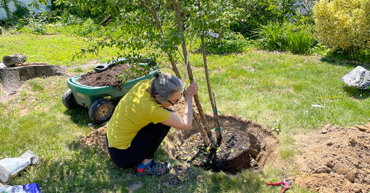
This morning I went out and dug in the garden. The spectacular weather and the sun on my shoulders reminded me of so many other mornings spent semi-filthy up to my elbows in dirt. This morning was particularly exciting, as I am in the process of transforming a small area from a mulch-covered strip into a butterfly/hummingbird/cutting garden.
Gardening was always a future-related activity for me. I spent hours planning what this year’s planting would turn into next year, 5 years, 10 years on; how one day my acre of property would turn into a space of beauty with food and shelter for wildlife. I swelled with pride at the transformation I had created in turning a lawn into a sanctuary.
When circumstances both beyond and within my control made it clear that I would need to sell my property, I was devastated. Not only was I leaving my garden, but every creature I had ever owned was also buried there. Every root of myself felt part of the soil. As the move got closer, I brought as few favorite plants as I could, including two 6” cuttings of a magically resilient fig tree, which had survived many harsh winters.
The plants came with me to my next residence, where I slowly turned the overgrown beds into a place for baby birds, bugs, snakes, and friends (both theirs and mine). Suspecting that there were more moves to come, the figs remained in their pots, growing slowly and steadily in whatever indoor or outdoor spot I placed them. When I left that garden, the new tenant pulled out most of what was there and planted a hedge.
Moving to my new, new place, along came the pots; here, nothing was planted, because this, too, would not be my last move, and I still felt the sadness of visiting my former, now bug-free garden, and my acre that had been turned into lawn.
What I try to impart when I teach mindfulness is that while sitting in meditation is important, so much of one’s practice comes from creating awareness of the infinite opportunities the world provides you to do this work. All you need to do is wait for it to show up, which it will do in both peeps and roars. Then, rather than turn away, lean in.
My current residence is surrounded by trees with almost no full sun, but there is a tiny strip along the driveway where I had hastily dragged my pots, which were watered regularly and did not die. Last year, the figs seemed to like and even became tiny tree-like in appearance. When I brought them inside for the winter, that small strip of full sun nagged at me, even as it was encased in 18” of ice.
As usually happens, I opened my favorite mindfulness book, Jon Kabat-Zinn’s Mindfulness for Beginners, after several months of being distracted in other places, and randomly landed on page 132, Letting Go. As JKZ writes:
“… letting go is akin to non-attachment, and in particular non-attachment to outcome, when we are no longer grasping for what we want, what we are already clinging to, or what we have to have … When we purposefully cultivate an attitude of letting things be as they are, it signifies that you recognize that you are bigger and more spacious than the voice that keeps saying ‘This cannot be happening’ or ‘Things have to happen this way’”
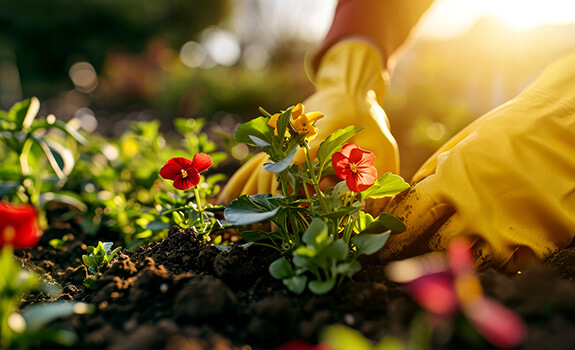
And so I decided to plant a garden this spring in the tiny patch of sun, because I realized that I was still clinging so hard to the notion that gardening was about outcome and some sort of legacy and story about the future rather than what it really is I love about a garden: noticing that a pink blossom is really three colors of pink, with a little orange, or seeing a butterfly “nectaring” on a freshly- planted native species, or hearing a bee coming for pollen. Or the thrill of the first bit of green as it pokes up in the Spring. Letting go seemed doable. I leaned in.
Mindfulness is also the practice of training the brain to stay in the present moment, which is difficult, as our brains much prefer to trick us into rehashing the past or pondering the future.
While I cannot claim to have mastered always living in the present, my new garden is serving as a wonderful part of my practice, teaching me that all I have are these things in this moment. Nothing is promised to me — not even my fig trees, which makes it even more delightful when I see their first leaves forming as the weather warms up. The only past that serves me is the knowledge I carry of what should grow here and feed which creatures and what might not. I can do nothing about who comes after me in this space, only how I choose to be in the space in this moment. The shoulda, coulda, woulda of my life still shows up on a regular basis, but I take that energy and look at what can feed at this moment, which very often, turns out to be my soul.