News•June 19, 2026
Emojis: Are Digital Expressions Rewiring the Human Brain?

By Ram Rao, Ph.D., Principal Research Scientist for Apollo Health
In today’s digital world, conversations increasingly occur not face-to-face, but screen-to-screen. Alongside words, emojis have become the emotional language of modern communication. A smiling face can soften criticism, a heart can convey affection, and an angry emoji can instantly change the tone of a conversation. But emerging neuroscience now suggests that emojis may influence the brain far more deeply than we imagined. Since emotional processing, stress regulation, and social connection are all closely linked to cognitive health, these findings may have important implications for brain aging and dementia prevention.
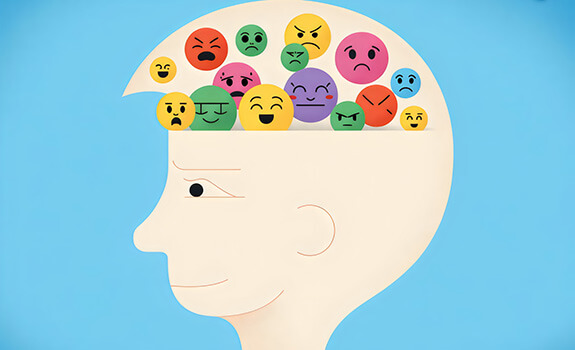
A recent EEG-based study from researchers at Bournemouth University found that the human brain processes emojis using neural pathways remarkably similar to those used to interpret real human facial expressions. Even more striking, this emotional recognition occurs extraordinarily fast, within approximately 100 to 160 milliseconds, well before conscious reflection begins. In other words, the brain may not fully distinguish between a real angry face and an angry emoji. Both are treated as emotionally meaningful social signals.
From an evolutionary perspective, this makes sense. Human survival has long depended on the ability to rapidly detect emotional cues, particularly signs of danger or hostility. Our brains evolved to recognize facial expressions almost instantaneously. Emojis, though artificial, appear to tap into this ancient neurological circuitry. The simplified and exaggerated nature of emojis may even amplify emotional recognition by removing ambiguity. A digitally furrowed brow or glaring expression becomes an emotional “shortcut” for the brain.
Interestingly, the research study also suggests that negative emojis, especially angry ones, may evoke particularly strong neural responses. This raises important questions about the emotional consequences of modern digital communication. An angry emoji used casually or sarcastically may still activate stress-related pathways in the recipient before rational interpretation occurs. Because this processing happens rapidly and often unconsciously, repeated exposure to negative emotional signaling may subtly shape mood, perception, vigilance, and interpersonal interactions. Over time, chronic activation of stress-related pathways may influence factors that are increasingly recognized as important for brain health, including emotional resilience, sleep quality, and cognitive function.
This issue may be especially important for children, adolescents, and young adults whose brains remain highly plastic and sensitive to environmental inputs. The modern brain is increasingly being trained not only by real-world experiences, but also by constant streams of digital emotional stimulation. While long-term studies are still needed, the implications are profound as it appears that digital communication is biologically active and not emotionally neutral.
At the same time, emojis are not inherently harmful. Positive emojis may foster warmth, emotional connection, and social bonding, particularly in text-based communication where tone and facial cues are absent. Since social engagement and positive emotional experiences are associated with greater cognitive resilience and a lower risk of cognitive decline, these digital expressions may serve as small but meaningful contributors to emotional well-being. Thus, a thoughtful smile, folded hands, or heart emoji can reinforce feelings of safety, empathy, and connection.
In many ways, emojis have become the digital equivalent of micro-expressions that shape the emotional climate of our interactions. From the perspective of brain health and emotional well-being, intention matters. Just as chronic exposure to negativity can influence stress pathways, repeated positive social signaling may strengthen affiliative and emotionally supportive neural networks. The brain is continuously shaped by the emotional environment we create, both offline and online.
The take-home message is simple yet profound: emojis are not merely decorative symbols. The brain experiences them as emotional stimulation. While emojis alone will not determine our cognitive future, they can influence emotions, stress responses, and social connections, all of which contribute to long-term brain health. In an age increasingly dominated by digital communication, the emotional signals we send each other may matter more than we realize.