March 18, 2026
AI or EI?

By Dale Bredesen, M.D., Chief Scientific Officer for Apollo Health
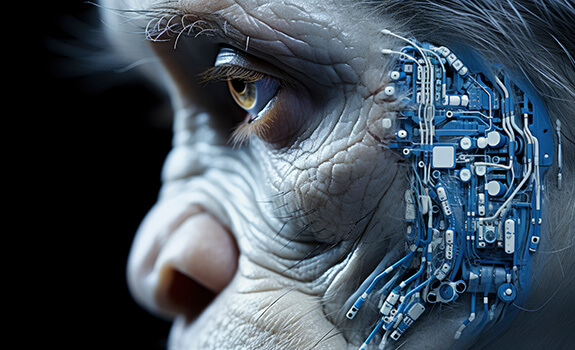
Artificial intelligence, AI, is everywhere these days, from college essays to robotic phone replies to war strategy (sadly) to arts & entertainment to medicine and on and on. As Conan O’Brien said at the Oscars, he will be the last human host — next year it will be AI, a Waymo in a tux. We hear about AI and its many uses on a daily, and often hourly, basis.
My brush with AI this past week showed me how truly valuable it can be: Aida and I were planning to go to a play in San Francisco, and an automatically-generated message came up online — “Need parking for the event?” I clicked “Yes,” and it notified me that, in a few days and well prior to the event, I would be sent a link that would provide parking. Indeed, a few days later, a link was sent, and when I clicked on it, it provided a QR code. Beneath the code was shown the details, all of which were fine except that the date was incorrect, and had nothing to do with the date of the event. So there was no parking for the event, but an excellent parking spot for when we would be nowhere near the city. OK, I thought, this is a simple mistake and should be easily sorted out. I was greeted by the ticket site’s “concierge” — i.e., a robot — and no matter how clearly I described the simple issue, the robot could not figure out what had gone wrong — something that most first-graders could have understood in seconds. After failing to grasp the issue repeatedly, the “concierge” told me that a human representative would be right with me … then the phone hung up. The incompetence was truly remarkable…so after shaking my head in disbelief for a while, I contacted the site once again, this time via chat, and once again, the issue proved to be too complex for the robot, so I was finally referred to a human chat agent (at least they claimed it was human), who told me that I needed to sign up for a new app (ParkWhiz, which has abysmal reviews) in order to see the parking pass, but he was clearly wrong — I already had the pass, it was simply for the wrong day. He couldn’t fix the problem, but suggested that perhaps going back to the link from ParkWhiz might help. When I did that, I was notified that “the parking has expired,” despite the fact that the event wasn’t for three more days. So for anyone using ParkWhiz or GoTickets, caveat emptor.
Thus clearly AI has its strengths but also its weaknesses. Meanwhile, to date the most impactful development in the ongoing medical revolution is not AI but rather EI—evolutionary intelligence. When we look at health from the standpoint of evolution instead of antiquated medical theories, everything begins to make sense — we realize that cardiovascular disease is not caused by cholesterol, Alzheimer’s is not caused by amyloid, and depression is not caused by serotonin deficiency. We realize that the pathology we have vilified for so long in medicine is not the cause, but rather the response to physiological challenges — ingesting foodstuffs we did not evolve to eat, being under stress we did not evolve to handle, being exposed to toxins exceeding our evolutionary detox capacity, responding to chronic infections from organisms that themselves have evolved to evade our immune systems, and pursuing lifestyles that we were simply not designed to live.
EI offers us a new view of disease, and more importantly, much more effective techniques to prevent and reverse the major illnesses that limit our healthspans, brainspans, and lifespans. Taking evolution into account gives us much more effective therapeutic approaches, and here are some of the outcomes we have documented — some in many and some in few, of course, but taken together, unprecedented outcomes:
- Improved blood pressure, both systolic and diastolic
- Weight loss and improved BMI
- Improved fasting insulin, hemoglobin A1c, fasting insulin, and fasting glucose
- Improved inflammation markers, both in the brain and peripherally
- Improved homocysteine
- Improved lipid profiles
- Improved memory
- Improved executive function
- Improved brain processing speed
- Improved brain training scores
- Sustained cognitive improvement, in some cases for over a decade (and ongoing)
- Reduction in depression
- Improved ASL (arterial spin labeling on MRI, a very sensitive imaging technique for Alzheimer’s)
- Improved MRI volumetrics
- Improved biomarkers such as p-tau 217 and GFAP
- Improved epigenetic markers of neuroplasticity
- Improved qEEG
- Improvement in evoked responses such as p300b
- Improvement in SYN-1, a marker for Parkinson’s
- Improvement in CBS (corticobasal syndrome, documented by Dr. Craig Tanio)
- Improvement in PCA (posterior cortical atrophy, documented by Kerry Rutland)
- Improvement in PSP (progressive supranuclear palsy, documented by Andrew Hanoun and Dr. Kat Toups)
- Improvements in dark adaptation and ocular coherence tomography in macular degeneration (documented by Jamie Langston, NP)
There is no doubt that AI will play an important role in medical innovations in years to come, but it is EI that has provided the conceptual insight that is leading to outcomes thought impossible just a few years ago.